Scales, Tales & Croc Smiles: Your Ultimate Guide to Reptile Encounters in Jaco
Sure, Jaco’s got waves that’ll make your Instagram feed sing and monkeys that photobomb like pros. But here’s what the glossy brochures won’t tell you: this slice of Costa Rica’s Pacific coast is absolutely teeming with reptiles. From colossal crocodiles lounging in river estuaries to neon-green iguanas treating our garden walls like their personal sunbathing decks, Jaco’s scaly residents are just as captivating as any toucan or sloth—if you know where to look and how to appreciate them safely. Whether you’re a wildlife-obsessed family, an adventure seeker chasing unique experiences, or a digital nomad looking for story-worthy encounters during your workation, this guide will help you navigate Jaco’s fascinating herpetofauna with confidence, respect, and maybe a few laughs along the way.
Beyond the Monkeys: Why Jaco’s Reptiles Deserve Your Attention
Let’s be honest: most folks roll into Jaco thinking about surf lessons and sunset cocktails. And fair enough—those are excellent life choices. But if you’re only scanning the treetops for capuchins and sloths, you’re missing half the show. Jaco’s herpetofauna—that’s fancy science-speak for reptiles and amphibians—is surprisingly diverse and utterly captivating once you start paying attention.
Think of it as nature’s scavenger hunt, where the prize might be spotting a neon green iguana munching on hibiscus flowers right outside your breakfast spot, or watching a colossal crocodile sunbathing by the Tárcoles River like it owns the place (spoiler: it kind of does). These encounters don’t require trekking deep into remote jungle—many happen right in town, on beaches, or during short day trips. The trick is knowing what you’re looking at, where to find them, and how to appreciate these ancient creatures without disturbing their routines or ending up as someone’s “what not to do” story on Reddit.
The Tárcoles River: Where Crocodiles Reign (Safely, From a Boat)
No trip to Jaco is complete without a jaw-dropping encounter with the American crocodiles on the Tárcoles River, about 25 minutes north. We’re talking seriously massive reptiles here—some reaching over 15 feet long, with jaws that could double as industrial equipment. These prehistoric beauties are the stars of Costa Rica’s reptile world, and seeing them in their natural habitat is an experience that’ll stick with you long after your tan fades.
Forget the cheesy roadside stops where tourists crowd onto a bridge for a quick peek. The proper way to experience this is through a guided boat tour that takes you right into their domain—respectfully, of course. Professional guides know exactly where the crocs hang out, understand their behavior patterns, and keep everyone at a safe distance while still getting you close enough for those screensaver-worthy photos. They’ll also share fascinating details about crocodile biology, conservation efforts, and the crucial role these apex predators play in the ecosystem.
Digital nomads, this is your chance to utterly outshine your last Slack status update. Imagine casually dropping photos of a 14-foot crocodile into your next team call while explaining you took them during your “lunch break.” Plus, these tours typically run early morning or late afternoon—perfect for bookending your workday with something that doesn’t involve spreadsheets. Check out our guide to Jaco’s best river tours for vetted operators who prioritize both wildlife welfare and guest safety.
Lizards Around Town: Your Everyday Scaly Neighbors
Keep your eyes peeled while walking through Jaco, and you’ll quickly discover that iguanas, geckos, and anoles are practically local residents. They’re everywhere—perched on fence posts, scurrying across sidewalks, or staking claim to the best sunny spots on building walls. Unlike the crocodiles, these guys are completely harmless and usually quite chill about human presence, making them perfect subjects for casual wildlife watching.
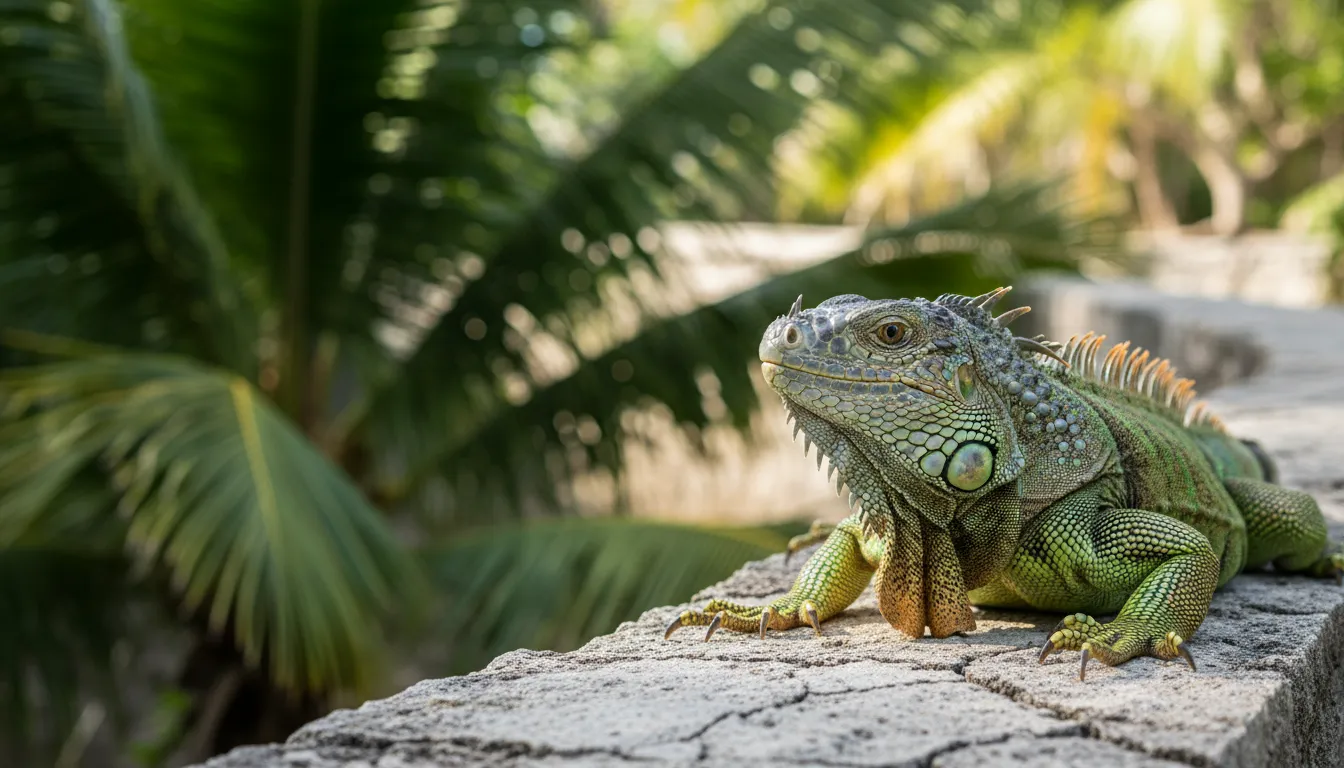
Green iguanas are the undisputed divas of the bunch. These magnificent lizards can grow over five feet long (mostly tail) and sport colors ranging from vibrant emerald to dusty brown depending on age, temperature, and mood. You’ll often spot them sunning themselves on tree branches, serenely munching on flowers and leaves, or—if you’re staying at Jaco Beach Zen—making themselves comfortable on our property walls like they’re posing for a nature documentary. They’re completely vegetarian, totally harmless, and frankly quite photogenic once you get used to their somewhat dinosaur-esque appearance.
Then there are the basilisks, affectionately known as “Jesus Christ lizards” for their remarkable ability to sprint across water on their hind legs. Spotting one performing this physics-defying feat near a local stream or pond is genuinely delightful—like watching a tiny, scaly miracle. Smaller anoles dart around everywhere, often sporting colorful dewlaps (throat fans) during territorial displays, while geckos emerge at night to hunt insects around outdoor lights, providing free pest control with a side of entertainment.
Snakes in the Rainforest: Fact vs. Fiction (Mostly Fiction!)
Yes, Costa Rica has snakes. Let’s just address the elephant—or rather, serpent—in the room right away. But before you cancel your trip and retreat to somewhere “safer” like a mall parking lot, here’s the reality: your chances of encountering a venomous snake during normal tourist activities are incredibly slim. These creatures are far more interested in avoiding you than making your acquaintance. They’re shy, they’re usually nocturnal, and they generally hang out in places tourists don’t—thick underbrush, hollow logs, and other spots well off the beaten path.
For the truly curious (and responsibly adventurous), the safest way to learn about Costa Rica’s fascinating snake species is by visiting a reputable serpentarium or joining a guided rainforest night walk. These experiences let you observe boas, colorful coral snakes, pit vipers, and other species from a completely safe vantage point while learning from experts who can explain their ecological importance, identify different species, and debunk common myths. It’s educational, thrilling, and doesn’t involve any actual risk beyond your mind being blown by how beautiful some of these creatures are.
Adventure seekers looking for an adrenaline bump should definitely consider guided rainforest night walks in nearby reserves. That’s when the nocturnal world comes alive, and with a knowledgeable guide carrying a spotlight, you might spot sleeping snakes, hunting tarantulas, and all manner of creatures that hide during daylight. The key word here is “guided”—attempting this solo is both dangerous and significantly less rewarding since you won’t know what you’re looking at or where to look safely.
Turtle Nesting Seasons: A Sacred (and Protected) Spectacle
While Jaco Beach itself isn’t a primary nesting site, nearby conservation areas along Costa Rica’s Pacific coast are absolutely vital nesting grounds for several sea turtle species, including olive ridleys and leatherbacks. Witnessing these ancient mariners lumber ashore to lay eggs, or watching a hundred tiny hatchlings make their frantic dash toward the waves, is genuinely one of nature’s most magical experiences—moving enough to bring grown adults to tears.
This isn’t your typical “jaco reptile tour,” but it absolutely embodies what responsible wildlife viewing should look like. Sea turtle nesting is strictly protected by Costa Rican law, and for good reason—these creatures are vulnerable, endangered, and easily disturbed. If you’re interested in this experience, you must go through permitted local guides who work with conservation organizations. They know which beaches are active, when arrivals are most likely, and exactly how to observe without causing stress or harm. Touching eggs, using flashlights, or approaching too closely can literally mean the difference between successful reproduction and nest failure.
Families, this is an educational and awe-inspiring experience that belongs in the memory books. It teaches kids about conservation, ocean ecology, and humanity’s responsibility toward endangered species in ways no classroom lecture ever could. Most tours include educational components about sea turtle conservation efforts and the challenges these animals face from pollution, climate change, and habitat loss. Just be aware that nesting season typically runs from July through November, with hatchlings emerging about 45-60 days after laying.
Responsible Reptile Viewing: Your Guide to Being a Good Neighbor
Here’s the thing about wildlife encounters: the best ones happen when animals are behaving naturally, unbothered by human presence. That means admiration from a distance is always the golden rule. These are wild animals, not pets or photo props, and keeping them wild is crucial for both their survival and your safety. Yes, even the “harmless” iguanas can deliver a surprisingly nasty bite or tail-whip if they feel cornered or threatened.
Always stick to guided tours when it comes to potentially dangerous animals like crocodiles and venomous snakes. Local guides are worth their weight in gold—they know animal behavior, they can spot camouflaged creatures you’d walk right past, they understand safe distances, and they’re trained in emergency response if something does go sideways. Trying to save a few bucks by DIY-ing these encounters is spectacularly foolish and disrespectful to both the wildlife and the local experts who’ve spent years learning their craft.
Never, ever feed wildlife. This applies to iguanas, monkeys, coatis, and every other creature you encounter. Feeding disrupts natural hunting and foraging instincts, makes animals associate humans with food (which can lead to aggressive behavior), and introduces unhealthy items into their diets. That cute iguana begging for your sandwich? He’s supposed to be eating flowers and leaves, not processed carbs. And frankly, nobody wants to deal with a hangry iguana who’s developed an entitlement complex around tourists. At Jaco Beach Zen, we’re committed to responsible tourism practices and educating our guests about proper wildlife interaction—because the best souvenir is a great memory and an intact ecosystem, not a bite mark and a ruined vacation.
Frequently Asked Questions
Are there really crocodiles that close to Jaco Beach?
Absolutely, though not typically right in the surf. The famous Tárcoles River crocodile population is only about 25 minutes north of Jaco, making it an easy day trip. These American crocodiles are massive—some exceeding 15 feet—and they’re found in the river estuary where freshwater meets the ocean. While they could theoretically venture to nearby beaches, it’s extremely rare. The river tours are perfectly safe with reputable operators who maintain respectful distances and follow strict safety protocols.
What should I do if I see a snake near my accommodation?
First, don’t panic. Most snakes you’ll encounter near accommodations are completely harmless and just passing through while hunting rodents or insects. Keep a safe distance, don’t attempt to touch or capture it, and alert property management immediately. We’ll contact local wildlife experts if needed to safely relocate the animal. Never try to kill or handle snakes yourself—most snake bites happen when people attempt to interact with them. Simply give them space and let professionals handle the situation.
Are Jaco’s iguanas dangerous to kids or pets?
Healthy iguanas generally want nothing to do with humans and will flee if approached. However, if cornered or provoked, they can bite, scratch with sharp claws, or deliver surprisingly powerful tail whips. They’re not aggressive, just defensive. Teach kids to observe from a distance and never chase or corner them. For pets, especially dogs, keep them leashed around iguanas—a curious pup who gets too close might receive a memorable lesson in respecting wildlife. With common sense and basic respect, iguanas and humans coexist peacefully.
Can I touch or feed the lizards I see around town?
Please don’t. While it’s tempting to interact with these seemingly tame creatures, feeding wildlife disrupts their natural diet and behavior, potentially making them dependent on humans or aggressive toward tourists. Touching wild animals stresses them and can transmit diseases in both directions. Enjoy them visually—they’re absolutely beautiful and fascinating to watch—but let them go about their business naturally. That’s how you get authentic wildlife behavior worth photographing, not stressed animals performing for handouts.
When is the best time of year to see sea turtles nesting near Jaco?
Pacific coast sea turtle nesting season primarily runs from July through November, with peak activity typically in September and October. Olive ridley turtles are most common, though leatherbacks also nest during earlier months. Hatchlings emerge roughly 45-60 days after eggs are laid, so August through December offers chances to witness both nesting and hatching events. Always book through authorized conservation tour operators—they monitor beaches carefully and know when and where turtles are most likely to appear while ensuring minimal disturbance.
Are there any reptile-specific tours directly from Jaco, or do I need to travel?
Most reptile-focused experiences require short trips from Jaco proper. The famous Tárcoles crocodile tours are about 25 minutes north. Serpentariums and rainforest reserves are scattered throughout the region, typically 20-45 minutes away. However, you’ll encounter plenty of lizards, iguanas, and geckos right in town and around accommodations without any organized tour. Many general wildlife tours and night walks include reptile sightings as part of broader biodiversity experiences. Local tour operators can arrange transportation and expert guides for all these options.
What’s the difference between a basilisk and an iguana?
Great question! Basilisks (Jesus Christ lizards) are much smaller—usually under two feet including tail—and are built for speed, often seen sprinting on hind legs across water. They’re typically brown or green with striped patterns. Green iguanas are much larger (up to five feet), stockier, with prominent dewlaps under their chins and spiny crests along their backs. Iguanas are strict vegetarians and move deliberately; basilisks are omnivorous and ridiculously fast. Once you see both, the difference is obvious—it’s like comparing a sports car to a tank.
Is it safe to walk through the rainforest without a guide if I’m looking for reptiles?
We strongly recommend against it. Rainforest trails can be confusing, and venomous snakes—while rare—do exist in Costa Rica. More importantly, without a trained guide, you’ll miss 90% of what’s there. Expert guides spot camouflaged creatures you’d walk right past, identify species accurately, know safe observation distances, understand animal behavior, and navigate trails safely. They transform a simple walk into an educational adventure. Plus, if something does go wrong—twisted ankle, unexpected weather, disorienting yourself—you’ll be very glad to have professional help rather than a dying phone battery and regrets.
Bahía Azul, unit 7C sits right on this stretch of sand — on the quiet south end of Jacó, a few hundred feet from the water.
Book on Airbnb