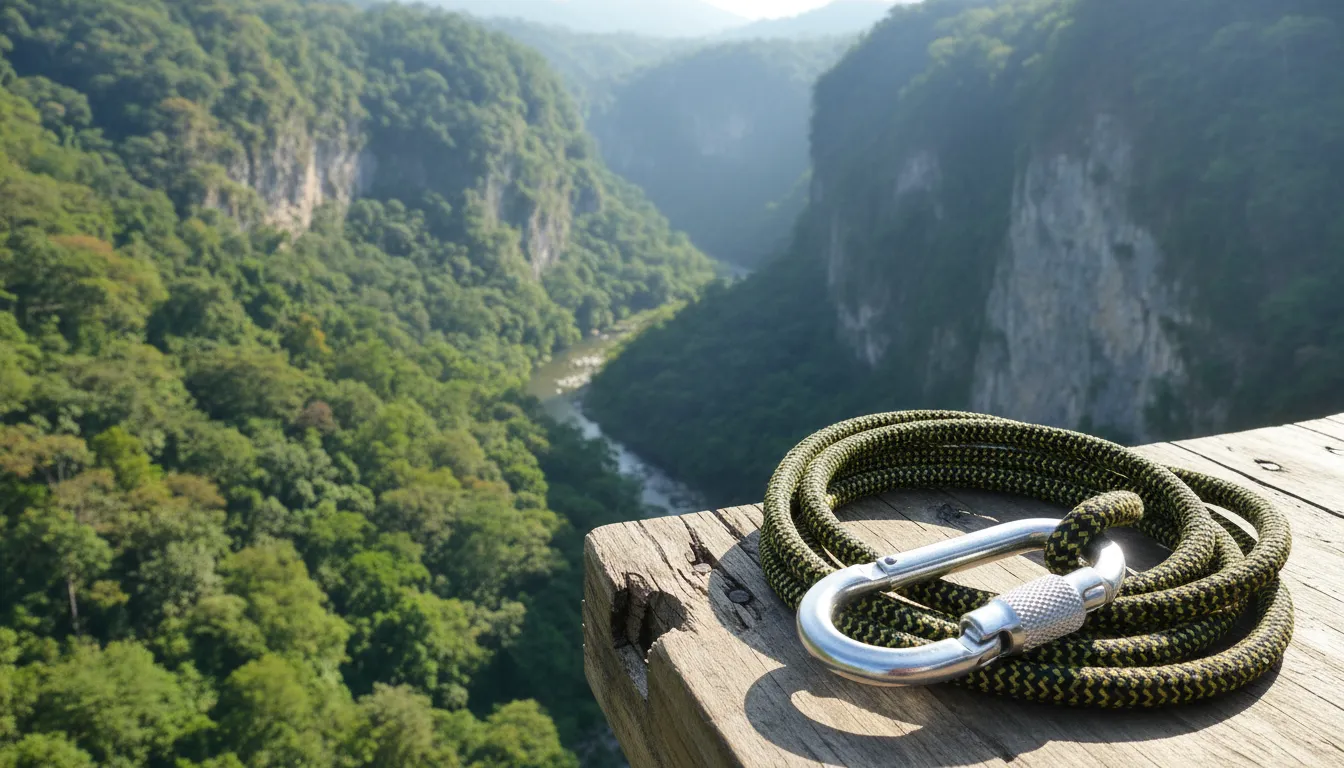
Jaco isn’t your typical sleepy beach town—it’s where the Pacific meets pure adrenaline, and nowhere is that more literal than when you’re standing on a platform 80 meters above a river canyon, contemplating life choices. Bungee jumping in Jaco Costa Rica has become one of the region’s signature extreme sports, attracting everyone from seasoned thrill-seekers to vacationers who decide at breakfast that today’s the day they conquer gravity.
While surfing in Jaco might be the town’s bread and butter, bungee jumping offers something surfing can’t: a controlled plummet toward earth that somehow counts as recreation. The closest commercial bungee operation sits just outside town, tucked into the lush Central Pacific landscape where mountains meet coastline. It’s the kind of experience that makes your pre-jump breakfast do backflips—and we’re not just talking about the gallo pinto.
Where to Go Bungee Jumping Near Jaco Beach
The primary bungee jumping operation near Jaco is located approximately 20 minutes inland, nestled in a river canyon that provides the natural amphitheater necessary for an 80-meter freefall. This isn’t a beachside attraction—the geography demands elevation, which means trading ocean views for jungle canopy and dramatic rock formations.
Most Jaco bungee jumping tours operate as half-day excursions, with hotel pickups available throughout the central Jaco area. The drive itself provides a transition from beach town energy to mountain serenity, winding through coffee plantations and rainforest before arriving at the jump site. It’s similar to how zip lining in Jaco operations are positioned—using the region’s topography to maximum advantage.
The jump platform is professionally constructed and regularly inspected, mounted to the canyon walls with engineering that meets international bungee standards. Below, the river flows through tropical vegetation, providing both a scenic backdrop and a psychological cushion (even though you’ll never get close to actually touching it). The site typically operates during daylight hours, with jump times scheduled throughout the day to accommodate different group sizes and experience levels.
What to Expect During Your Jaco Bungee Jump
The experience begins with a safety briefing that’s thorough without being alarmist—guides know that overthinking is the enemy of jumping. You’ll learn about the equipment (harnesses, ankle straps, the bungee cord itself), the jump sequence, and what to expect during the fall and rebound. Weight restrictions apply, typically ranging from 45kg to 120kg, ensuring the bungee cord can be properly calibrated for a safe, controlled bounce.
Once harnessed and checked (then double-checked), you’ll walk out onto the platform, where the perspective shifts dramatically. That 80-meter drop looks theoretical from ground level; from the platform, it’s aggressively real. The jump itself is a countdown—3, 2, 1—followed by a leap (or in some cases, a gentle push from your less-than-sympathetic guide) into open air.
The freefall lasts about 3-4 seconds before the bungee engages, creating a momentary sensation of weightlessness before physics reasserts itself. You’ll bounce several times, gradually settling as the cord’s energy dissipates, before being lowered to the retrieval point below. Total time from platform to ground is roughly 2-3 minutes, though it tends to feel simultaneously infinite and instantaneous. Many jumpers report that the anticipation is worse than the actual jump—which tells you everything about the human brain’s relationship with voluntary terror.
Bungee Jump Jaco Heights and Safety Standards
At 80 meters (approximately 260 feet), the Jaco area bungee jump ranks among the higher commercial jumps in Central America. For context, that’s roughly the height of a 26-story building, or about the length of a football field if stood on end. The height provides enough freefall time for your life to briefly flash before your eyes, but not so much that you have time to write a memoir mid-plunge.
Safety protocols follow international bungee standards, with equipment sourced from reputable manufacturers and regularly inspected. Cords are rated for specific weight ranges and replaced according to manufacturer guidelines—well before they show any wear. Staff are trained in emergency procedures, though actual emergencies are remarkably rare when operations follow proper protocols.
The harness system uses both a body harness and ankle attachment, providing redundancy that’s both comforting and slightly awkward to walk in. Ankle attachment is standard for bungee jumping worldwide, as it provides the classic head-down orientation during the fall. If you’re concerned about safety standards for adventure activities, it’s worth noting that commercial bungee operations in Costa Rica are subject to tourism board oversight, similar to how ATV tours in Jaco and other adventure operators maintain certification requirements.
Jaco Bungee Jump Prices and What’s Included
Prices for bungee jumping near Jaco typically range from $80 to $120 USD per person, depending on package inclusions and whether you’re booking directly or through a tour operator. Most packages include round-trip transportation from Jaco hotels, the jump itself, safety equipment, and a souvenir certificate proving you did something your mother specifically told you not to do.
Photo and video packages are available for an additional fee, usually $20-40 USD, and are genuinely worth considering. Your own recollection of the experience will be fragmented at best—having professional footage provides proof for skeptical friends and fuel for future regret or pride, depending on your facial expressions mid-plunge.
Group rates are sometimes available for parties of four or more, and some operators offer combination packages pairing bungee jumping with other adrenaline activities. Weight restrictions, age minimums (typically 18 years), and health considerations apply, so confirm eligibility when booking. Payment usually includes Colones or USD, with credit cards accepted by most established operators. Like [horseback riding in Jaco](/Activities and Attractions/horseback-riding-in-jaco), advance booking is recommended during peak season to secure your preferred jump time.
Best Time for Bungee Jumping in Jaco Costa Rica
Jaco’s dry season (December through April) offers the most predictable weather for bungee jumping, with clear skies and minimal rain interference. That said, bungee jumping operates year-round, and green season (May through November) provides its own advantages: fewer crowds, lusher scenery, and the occasional dramatic backdrop of distant rain showers.
Morning jumps tend to be calmer, both meteorologically and psychologically—your courage is fresher before lunch. Afternoon slots can be windier, which adds an extra wobble to the platform experience but doesn’t significantly affect safety. The operation typically doesn’t run during heavy rain or high winds, so keep weather contingencies in mind when planning your Jaco itinerary.
Weekdays are generally less crowded than weekends, when local Ticos join the tourist contingent for their own adrenaline fixes. If you prefer a more intimate jump experience (as intimate as plummeting toward earth can be), Tuesday through Thursday tend to be quieter. After your jump, you’ll likely need some recovery time—plan for a relaxed afternoon rather than immediately launching into [waterfall tours in Jaco](/Activities and Attractions/waterfall-tours-in-jaco). Trust us, your nervous system will appreciate the break.
Other Extreme Sports and Adrenaline Activities in Jaco
Bungee jumping is just one option in Jaco’s extensive adventure portfolio. The region’s diverse geography—beaches, mountains, rivers, and rainforest—supports an impressive range of extreme sports and adrenaline activities that cater to various courage levels.
[Zip lining in Jaco](/Activities and Attractions/zip-lining-in-jaco) offers high-speed canopy tours with less vertical terror than bungee jumping but its own brand of exhilaration. [ATV tours](/Activities and Attractions/atv-tours-in-jaco) let you explore mountain trails and beaches at speed, getting muddy in the process. For water-based thrills, [white water rafting in Jaco](/Activities and Attractions/white-water-rafting-in-jaco) tackles Class III-IV rapids on nearby rivers, combining adrenaline with stunning natural scenery.
[Sportfishing in Jaco](/Activities and Attractions/sportfishing-in-jaco) might not seem extreme until you’re fighting a 200-pound marlin, and [scuba diving in Jaco](/Activities and Attractions/scuba-diving-in-jaco) offers its own form of underwater adventure. Even [surfing in Jaco](/Activities and Attractions/surfing-in-jaco), while more accessible to beginners, can push experienced surfers when the swells pick up. The point is, if bungee jumping doesn’t satisfy your adrenaline quota, Jaco has backup plans.
Preparing for Your Jump: What to Bring and Wear
Dress for comfort and movement—athletic clothing that you don’t mind getting wrinkled during the harness experience. Closed-toe shoes are mandatory (flip-flops and bungee jumping are mutually exclusive activities). Leave jewelry and loose items at your hotel or secured in provided lockers; the last thing you want is your grandmother’s necklace achieving independent flight mid-bounce.
Bring water and light snacks, especially if you’re jumping during midday heat. Some people experience mild nausea post-jump (adrenaline does interesting things to digestion), so having crackers or fruit available can help. Sunscreen and insect repellent are Costa Rica standards for any outdoor activity.
Most importantly, bring a mindset that’s open to confronting fear. Bungee jumping is as much a psychological challenge as a physical one—the equipment will keep you safe, but you have to convince your brain to override its very sensible objection to jumping off tall things. If you’re staying at properties like Jaco Beach Zen, the peaceful morning atmosphere and proximity to both beach and town make it an ideal base for adventure activities without the stress of complicated logistics.
Frequently Asked Questions
Is bungee jumping in Jaco safe for first-timers?
Absolutely. The vast majority of bungee jumpers are first-timers, and operations are specifically designed for people with zero experience. Professional guides walk you through every step, equipment is thoroughly checked, and safety protocols meet international standards. The biggest challenge is mental, not physical—your body is secure; it’s your brain that needs convincing. Age and weight restrictions ensure that all jumpers fall within safe parameters for the equipment used.
How much does bungee jumping cost in Jaco?
Expect to pay between $80-120 USD per person for the basic jump package, which includes transportation from Jaco hotels, all safety equipment, the jump itself, and a certificate. Photo/video packages add another $20-40 USD but provide professional documentation of your leap. Group discounts are sometimes available, and booking directly versus through tour operators can affect pricing. All fees should be confirmed when booking, as packages may vary by operator and season.
What are the weight and age limits for bungee jumping?
Typical weight restrictions range from 45kg (99 lbs) to 120kg (265 lbs), though exact limits vary by operator and equipment specifications. Minimum age is usually 18 years, with parental consent potentially allowing 16-17 year-olds in some cases. These restrictions exist because bungee cords are calibrated for specific weight ranges—too light or too heavy affects the physics of the jump and compromises safety. Health restrictions include pregnancy, heart conditions, and recent surgeries.
Can I bungee jump if I’m afraid of heights?
Many people with height fears successfully complete bungee jumps—the experience is as much about confronting that fear as enjoying the fall. However, severe acrophobia might make the platform experience overwhelmingly stressful rather than thrilling. Some operators allow you to back out without penalty if you reach the platform and genuinely can’t jump. Consider starting with activities like zip lining, which involves height but keeps you attached throughout, before committing to bungee jumping.
What’s the best time of day to go bungee jumping in Jaco?
Morning jumps (8-10am) offer cooler temperatures, calmer winds, and peak personal courage levels—most people find it easier to commit to the jump earlier in the day before overthinking sets in. Afternoon slots can be windier but offer dramatic lighting for photos. Weather permitting, operations run throughout the day during dry season. Book according to your personal energy patterns: morning people should jump early, while night owls might need afternoon slots to fully wake up before making life-altering decisions about gravity.
Bahía Azul, unit 7C sits right on this stretch of sand — on the quiet south end of Jacó, a few hundred feet from the water.
Book on Airbnb