Jaco Surf Safety: Don’t Just Ride Waves, Ride ‘Em Smart (and Safe!)
So you’ve dragged your board to Jaco, stared at those consistent Pacific rollers, and felt that familiar itch to paddle out. Good call. This town’s waves are as reliable as your morning coffee—year-round, beginner-friendly-ish, and occasionally humbling enough to remind you who’s really in charge (spoiler: it’s the ocean). But here’s the thing about Jaco’s surf scene that separates the stoked from the sorry: knowing how to read the water, respect the locals (human and aquatic), and avoid becoming a cautionary tale shared over Imperial beers. Whether you’re a first-timer renting a foam board or a seasoned wave-chaser who’s surfed half the Pacific, these safety tips aren’t just suggestions—they’re your ticket to riding smart, staying vertical, and keeping all your limbs where they belong.
Understanding Jaco’s Waves: It’s Not Just About How Big They Are
Jaco doesn’t typically throw the kind of monstrous swells that make surf documentaries. What it does serve up is consistency—and that’s the real magic here. You’re looking at rideable waves pretty much every day of the year, ranging from mellow rollers perfect for longboarders to punchy beach breaks that’ll test your pop-up speed. But don’t mistake “consistent” for “predictable.” These waves have moods, and understanding their temperament starts with respecting the fundamentals.
Tide makes all the difference between a fun session and a humbling one. Mid to high tide in Jaco often brings more powerful waves and increases the likelihood of rip currents, particularly near the northern and southern ends of the beach. The sand slopes there create natural funnels that the ocean loves to exploit, pulling water (and unsuspecting surfers) seaward with surprising efficiency. Low tide can expose rocks in certain spots and create closeouts that slam harder than they look. The sweet spot? Usually around mid-tide, when the sandbars cooperate and the waves peel rather than dump. Check the tide charts before you wax up, and if you’re staying close to the main beach area—say, within walking distance of good coffee and even better sunsets—you’ve got the luxury of timing your sessions around optimal conditions rather than committing to a full-day beach marathon.
Rip Currents and How Not to Wrangle Them (Hint: Don’t Fight ‘Em)
Let’s talk about Jaco’s secret weapon in the safety department: actual lifeguards. This is a luxury many Costa Rican beaches simply don’t offer, especially with any consistency. The central stretch of Jaco Beach usually has lifeguard coverage, complete with those universal colored flags that speak the international language of “maybe rethink your choices.” Green means go, yellow means proceed with caution (and actual skill), and red means find another activity—like testing the pool back at your rental or exploring town on foot. These aren’t suggestions. The ocean doesn’t negotiate.
Now, about those rip currents. They’re not out to drown you personally, but they will if you panic and try to swim directly against them. The golden rule bears repeating because it saves lives: paddle parallel to the shore. Think of a rip current like a liquid treadmill running perpendicular to the beach. Fighting it head-on is a losing battle that’ll exhaust you faster than you’d think. Instead, paddle sideways—left or right, doesn’t matter which—until you’re out of the current’s grip, then ride the whitewash back to shore. If you’re too tired to paddle, stay calm, float, and signal for help. Those lifeguards we mentioned? They’re watching.
Compared to nearby Playa Hermosa (our rowdier southern neighbor known for bigger, meaner surf), Jaco offers better odds for lifeguard presence and clearer safety infrastructure. That said, common sense remains your best lifeguard. If the water looks angry, the flags are screaming red, or locals are on the beach rather than in it—take the hint. The waves will still be here tomorrow.
The Leash & The Board: Your Best Buds in the Water
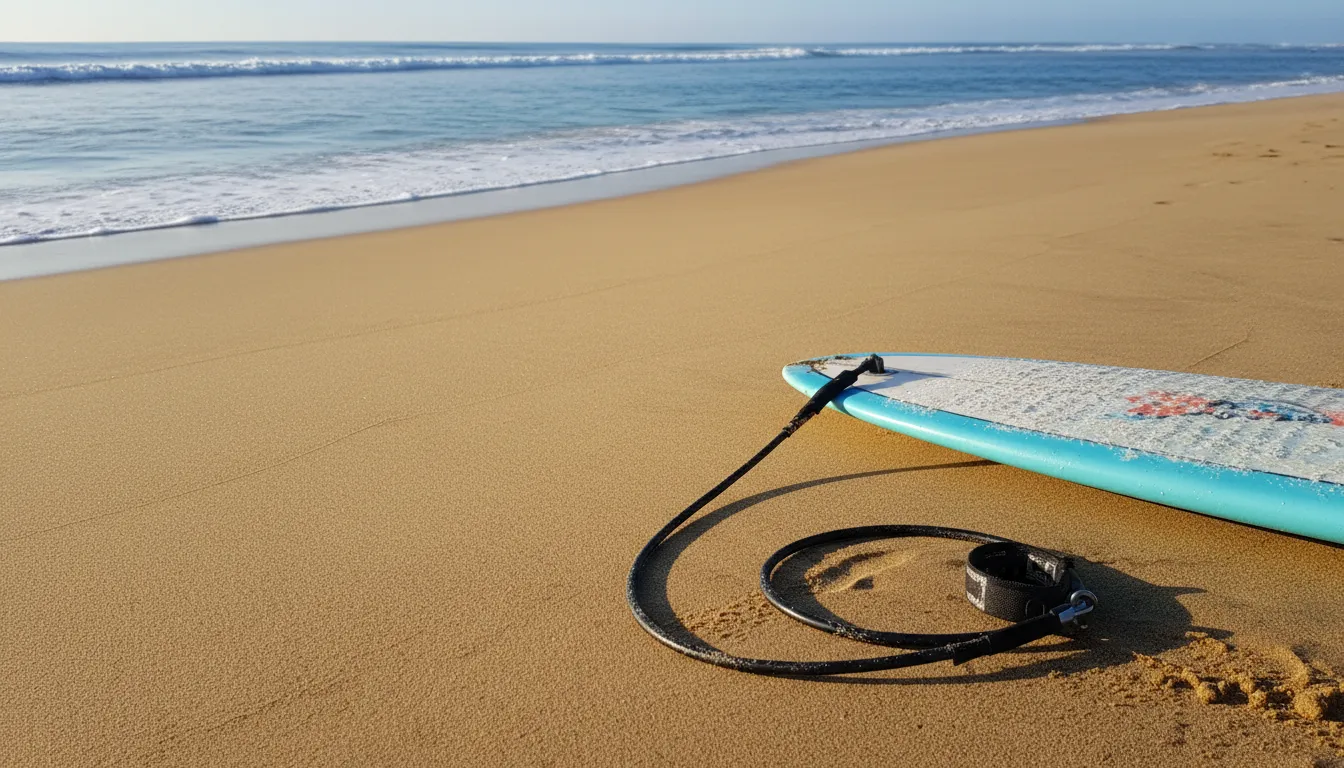
Your surfboard leash isn’t fashion. It’s not even optional. It’s literally your lifeline to a floating object when a wave decides to introduce your face to the ocean floor. A quality leash, properly attached to both your ankle and your board, keeps your ride from becoming a runaway projectile that clocks another surfer or simply floats to Guatemala while you tread water. Check your leash before every session—look for fraying, weakened velcro, or any sign it’s lived a harder life than you have.
Equally important: know your board’s personality. Soft-top rentals are forgiving, buoyant, and ideal for beginners who are still mastering the art of not falling (which, let’s be honest, is most of surfing). Fiberglass boards are faster, more responsive, and significantly less forgiving when they ricochet into your skull. Understanding your board’s limits means knowing when to bail safely—pushing it away from you and others, covering your head as you surface, and always assuming your board is coming back at you like a boomerang with trust issues. Treat your board like the essential safety device it is, and it’ll return the favor by not sending you to the local clinic for stitches.
Jaco Surfing Etiquette: The Unwritten Rules of the Lineup
The lineup has rules, even if nobody’s handing out pamphlets. Ignore them, and you’ll earn side-eye at best, heated confrontations at worst. The most sacred rule: right of way belongs to the surfer closest to the peak—the spot where the wave starts breaking. Wait your turn. Snaking a wave (paddling around someone to steal their priority) is universally despised and will earn you a reputation faster than you can paddle back out. Respect the rotation, communicate clearly, and understand that locals who surf here daily have earned their spot in the pecking order.
Communication prevents collisions and keeps the vibe friendly. A quick shout of “left!” or “right!” when you’re taking off lets others know your intended direction and helps everyone share the waves without unnecessary drama. If you accidentally drop in on someone (cut them off mid-ride), acknowledge it with a quick apology. Most surfers appreciate the gesture and won’t hold a grudge. The overall vibe in Jaco leans toward Pura Vida rather than territorial aggression, but that goodwill depends on mutual respect. Smile, share waves with groms, and remember that we’re all just visitors in the ocean’s house—even the locals.
Beyond the Basics: What Every Surfer Needs to Know Before Paddling Out
Sunscreen isn’t optional in Costa Rica; it’s survival equipment. The equatorial sun operates on a different intensity level than you’re probably used to, and a forgotten scalp, back, or feet will absolutely ruin your next few days. Use reef-safe sunscreen—the ocean ecosystem here deserves better than a chemical bath every time you paddle out. Reapply frequently, especially after duck-diving or getting worked by a set. Your future self will thank you for avoiding the lobster look.
Check local surf conditions obsessively. Resources like Surfline and Magicseaweed offer swell forecasts, but nothing beats local intel. Chat with surf shop employees, ask other surfers, or swing by your rental spot (assuming it’s close to the beach and staffed by people who actually surf here). We keep tabs on conditions and can usually tell you whether it’s worth the paddle or if you should save your energy for another session. Conditions can shift throughout the day as tides change and wind picks up, so flexibility beats rigid schedules.
Hydration is non-negotiable. You’re in the tropics, exerting yourself, and probably losing more water than you realize. Keep a water bottle within reach on the beach. If you’re staying somewhere with filtered water—say, a beachfront rental that prioritizes both convenience and not destroying the planet with single-use plastic—take advantage and refill throughout the day. Dehydration sneaks up on you, dulling your reflexes and decision-making right when you need them most. Surf smart by staying topped up.
FAQ
Are Jaco’s rip currents really that bad, or is it just hype?
They’re real, but manageable if you know what to do. Jaco’s rip currents are most common during mid to high tide, especially near the beach’s northern and southern ends where sandbars create natural channels. The danger isn’t the current itself—it’s panicking and fighting it. Swim parallel to shore until you’re free, then catch a wave back in. Lifeguards are stationed along the central beach, so you’ve got backup most surfers in Costa Rica don’t have. Respect the ocean, watch the flags, and you’ll be fine.
Do I need to wear a wetsuit when surfing in Jaco?
Nope. Water temps hover around 80°F (27°C) year-round, making Jaco a boardshorts-and-rashguard paradise. A rashguard protects against sun and board rash, but thermal insulation isn’t on the packing list. If you’re used to Northern California or European waters, you’ll feel like you’ve entered a warm bath. Save the wetsuit space in your luggage for more beer money.
What should I do if I see someone struggling in the water?
Signal the lifeguards immediately if you’re near the central beach. If no lifeguards are visible, grab a floatation device—your board, a boogie board, anything—and approach carefully without putting yourself at risk. Drowning victims can panic and pull rescuers under. If you can’t safely help, call 911 (yes, it works in Costa Rica) or alert other surfers. Never attempt a rescue beyond your skill level.
Is it safe to surf alone in Jaco, especially as a beginner?
Not ideal. Even experienced surfers benefit from the buddy system—someone to watch your back, signal for help if needed, or retrieve your board when it decides to explore on its own. For beginners, surfing alone multiplies every risk. Jaco’s central beach usually has enough people in the water that you’re not truly isolated, but having a friend or joining a surf lesson provides accountability and safety. Plus, it’s more fun with company.
Where are the best spots for beginner surfers in Jaco with the least hazards?
Stick to the central stretch of Jaco Beach, directly in front of the main town area. This zone offers gentler waves, lifeguard coverage, and sandbars that create more forgiving breaks. Avoid the far north and south ends until you’re more experienced—those areas have stronger currents and less supervision. The beach right near town gives you easy access to rentals, instructors, and a quick escape route if conditions deteriorate.
What are the red flags I should look for before getting in the ocean?
Literally: red flags posted by lifeguards mean stay out. Figuratively: angry, frothy whitewater extending far from shore suggests strong currents. Dark channels between sandbars indicate rip current highways. If locals are watching from the beach instead of surfing, that’s your cue. Offshore winds creating choppy, disorganized conditions make paddling out exhausting. And if the waves are closing out hard (breaking all at once rather than peeling), you’re in for a beating, not a ride. When in doubt, wait it out.
Bahía Azul, unit 7C sits right on this stretch of sand — on the quiet south end of Jacó, a few hundred feet from the water.
Book on Airbnb