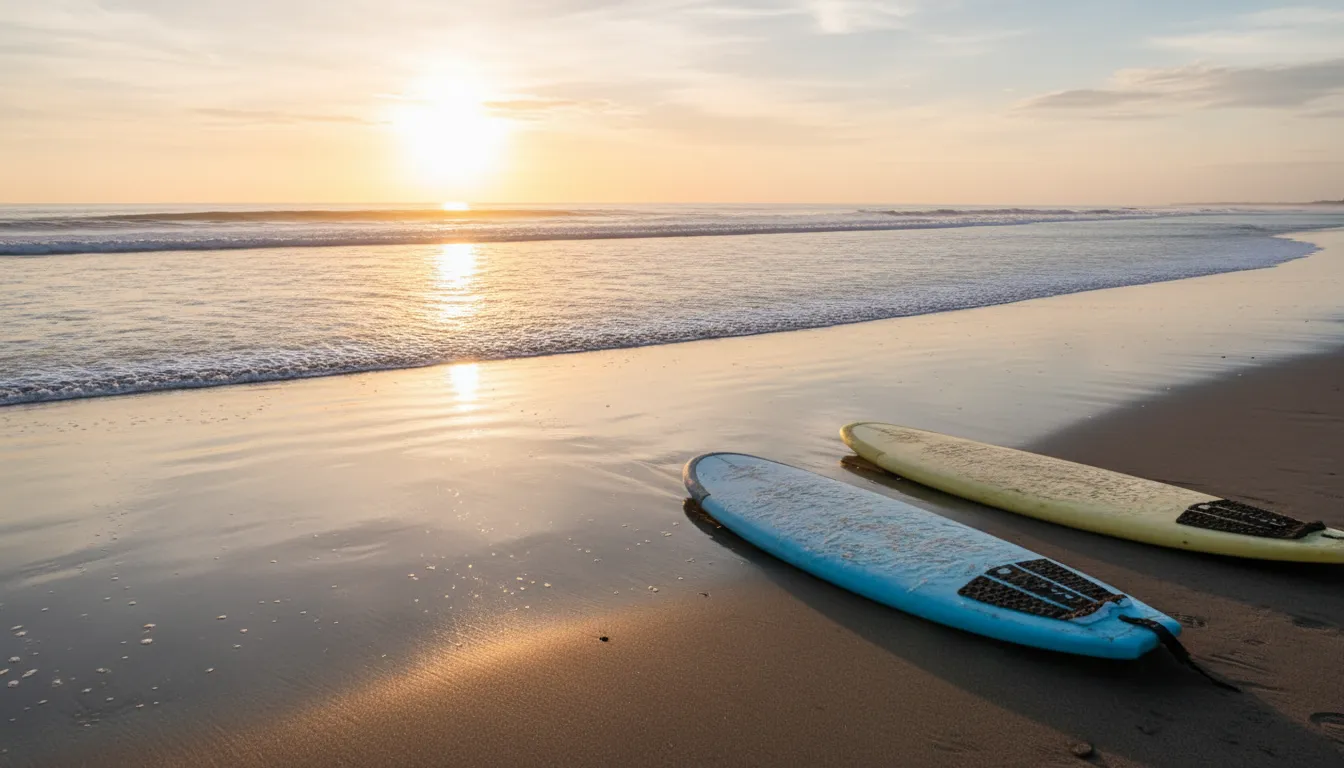
Jaco Beach isn’t just where Costa Rica’s surf culture lives—it’s where it welcomes you with open arms and forgiving waves. I’ve watched countless first-timers paddle out here looking terrified and walk back grinning like they’ve discovered fire. The consistent beach break, warm water, and abundance of patient instructors make Jaco the rare spot where “learning to surf” doesn’t translate to “swallowing half the ocean while locals laugh.” Whether you’re traveling solo, bringing the family, or just tired of watching surfers from the beach and wondering what all the fuss is about, this guide breaks down everything you need to know to catch your first wave in Jaco—without the usual beginner mistakes that turn surf lessons into expensive photo ops of you face-planting in the shore break.
Why Jaco Is Perfect for Beginner Surfers
Jaco’s reputation as Costa Rica’s beginner surf haven isn’t marketing fluff—it’s geography and consistency working in your favor. The beach faces southwest, catching swells year-round with enough power to push you onto waves but not enough to make you question your life choices. The sandy bottom means wipeouts don’t involve reef rash, and the water temperature hovers around 80°F, so you’ll surf in boardshorts or a rashguard instead of wrestling into a wetsuit.
What really sets Jaco apart is the variety within one beach. The main break in front of the town offers mellow rollers perfect for standing up your first time, while the north end near the estuary serves up slightly mushier waves that practically beg beginners to ride them. You’re not stuck with one take-it-or-leave-it surf spot—you can walk the beach and find your comfort zone. Plus, the town’s surf infrastructure is legitimately beginner-friendly. You’ll find more surf schools and board rentals per square mile than anywhere else in Costa Rica, and competition keeps prices reasonable and instruction quality high. When you’re starting out, having options and backup plans beats remote perfection every time.
Best Beginner Surf Spots Along Jaco Beach
The main beach break directly in front of downtown Jaco is where most surf schools set up shop, and for good reason. The waves here are predictable, the bottom is sandy, and you’re never more than a short walk from bathrooms, water, and shade. The peak breaks both left and right, giving you options depending on the day’s conditions. During low to mid-tide, the sandbar formations create gentle shoulders perfect for practicing your pop-up without getting immediately clobbered.
Head north toward the Jaco Lagoon area for even mellower conditions. The waves here break slower and mushier—which sounds like an insult but is actually perfect when you’re still figuring out how to stand on a moving object. The crowd thins out too, so you’ll have more space to flail around without endangering anyone. The south end of the beach, near Playa Hermosa, gets more powerful and is best left for after you’ve graduated beyond the “barely standing” phase.
Timing matters more than location sometimes. Early morning from 6-9 AM offers the cleanest conditions with lighter winds and smaller crowds. The afternoon onshore winds get choppy, though the waves stay rideable—just expect a bumpier learning experience. Check the conditions before committing to one spot; sometimes the north end is glassy while the main break looks like a washing machine, or vice versa. Walking the beach to scout takes ten minutes and saves an hour of frustration.
Choosing the Right Surf School in Jaco
Jaco has more surf schools than pharmacies, which creates both opportunity and decision paralysis. The best beginner-focused schools share certain traits: small group sizes (4-6 students max per instructor), longer lesson times (at least 2 hours in the water), and instructors who actually get in the water with you instead of shouting from the beach. Schools like Tortuga Surf School, Costa Rica Surf & SUP, and School of the World have built reputations on patience and proper technique, not just pushing tourists onto foam boards and calling it a lesson.
Ask specific questions before booking: What’s the instructor-to-student ratio? Do they teach ocean safety and wave reading, or just pop-ups on the sand? Is the lesson time actual water time, or does it include 45 minutes of land instruction? Good schools will spend 15-20 minutes covering basics on the beach, then get you in the water where real learning happens. They’ll also match you with appropriate conditions—if the surf’s pumping, they’ll move the lesson to a mellower spot rather than throwing beginners into overhead waves for the sake of convenience.
Multi-day packages offer better value and results than single lessons. Your first session might feel like controlled chaos, but by day three, you’ll actually be reading waves and timing your pop-ups. Plus, schools often discount 3-5 day packages significantly. If you’re staying somewhere like Jaco Beach Zen, which sits close enough to walk to surf spots but far enough to avoid the main street chaos, you can easily commit to morning lessons and still have afternoons free to explore or recover.
Equipment: What Beginners Actually Need
Forget what you’ve seen in surf movies—you don’t need a thruster shortboard and a sponsor. Beginner boards are wide, thick, foam-topped planks that look dorky and work beautifully. They’re stable, float you easily, and don’t hurt when they inevitably bonk you in the head. Most surf schools include soft-top boards (usually 7-9 feet) in their lesson fees, and these are exactly what you want. The extra volume helps you catch waves early, and the soft deck means bruises instead of stitches when you mess up.
If you’re renting independently, ask for the biggest board they’ll give you. Your ego wants a sleek 6-footer; your learning curve needs an 8-foot foamie. Rental shops along Jaco’s main strip charge $10-20 per day, with discounts for multiple days. Shops like Jaco Surf Shop and Carton Brewing Surf Shop have good beginner inventories and staff who’ll actually recommend appropriate boards instead of renting you something you’ll hate.
For clothing, a rashguard protects against sun and board rash—both of which will ruin your second day if you skip protection on day one. The water’s warm enough that boardshorts or a swimsuit work fine. Skip the wetsuit unless you’re surfing dawn patrol in the rainy season and get cold easily. Reef booties are unnecessary here since the bottom’s sandy. Basically, if surf shops are trying to outfit you like you’re paddling into Pipeline, they’re upselling. Jaco’s beginner waves require minimal gear—another reason it’s ideal for first-timers.
Understanding Jaco’s Wave Conditions and Tides
Jaco’s waves work year-round, but conditions shift with seasons and tides in ways that matter for beginners. May through November (rainy season) brings the biggest, most consistent swells—which sounds great until you realize “big” can mean overhead and intimidating for first-timers. December through April offers smaller, friendlier waves that are perfect for learning, though there are flat spells where you’ll wonder if you picked the wrong week. The good news: Jaco rarely goes completely flat for more than a day or two, and even small days offer rideable waves if you know where to look.
Tides affect wave quality dramatically. Low to mid-tide generally offers the best beginner conditions, with waves breaking cleanly over sandbars. High tide at some spots creates closeouts (waves that break all at once) or shoreline dump waves that are short and violent. Check tide charts—available free through apps like Surfline or Magic Seaweed—and plan sessions around the lower tides. A mid-morning session at rising tide often provides the sweet spot: still relatively uncrowded, good wave shape, and warming sunshine.
Wind patterns follow a reliable daily script. Mornings start glassy (little to no wind), then onshore winds pick up by late morning or early afternoon, creating choppier surface conditions. Those bumpy afternoon waves are still surfable and still fun, just messier. If you’re only doing one session per day, make it the morning. If you’re keen for two, grab the dawn patrol and a sunset session, skipping the midday wind-chop window. Understanding these patterns means you’ll surf Jaco’s best conditions instead of fighting its worst—which makes the difference between “surfing is impossible” and “I can’t believe I’m actually doing this.”
Safety Tips Every Beginner Should Know
The ocean doesn’t care that you paid for a lesson. Even Jaco’s beginner-friendly waves demand respect and awareness. Rip currents are the biggest hazard—narrow channels where water flows back out to sea, pulling swimmers and surfers offshore. If you feel yourself being pulled out, don’t panic and don’t fight it by swimming straight to shore. Swim parallel to the beach until you’re out of the current’s pull, then angle back in. Better yet, if you’re stuck in a rip during a lesson, signal your instructor immediately. They deal with this constantly and know the local rip patterns.
Leash etiquette prevents injuries and lost boards. Always attach your leash to your back ankle before entering the water, and check that the Velcro is secure. A loose board in the surf zone is a 20-pound projectile that can hurt you or someone else. If you lose your board and it’s washing toward shore, don’t chase it through the impact zone—let it wash in, then retrieve it from the beach. Replacing a lost board is cheaper than a hospital visit.
Sunburn sneaks up fast in the tropics, especially when you’re wet and distracted. Apply waterproof SPF 50+ before your session, reapply after, and wear a rashguard for extra protection. Dehydration is equally sneaky—the combination of sun, salt water, and physical exertion drains you faster than you realize. Drink water before and after surfing, not just when you feel thirsty. These aren’t theoretical tips; I’ve watched countless beginners torch themselves on day one and spend day two lobster-red and miserable instead of back in the water.
Realistic Expectations: Your First Sessions
Here’s what your first surf lesson will actually look like: 15 minutes of beach instruction covering pop-up technique, paddling basics, and where to position yourself. Then you’ll paddle out to the white water (already-broken foam waves), where you’ll practice catching waves and popping up about 20-30 times over the next 90 minutes. You’ll stand successfully on maybe 30% of those attempts if you’re coordinated, less if you’re not. This is normal. Surfing is absurdly hard at first, and anyone who tells you otherwise is lying or forgot.
By your third or fourth session, something clicks. You’ll start reading waves better, timing your paddle, and popping up more smoothly. By the end of a week of daily lessons, most people can catch unbroken green waves and ride them for a few seconds. This feels like winning an Olympic medal. Progress is exponential—the first day feels impossible, the fifth day feels achievable, and the tenth day feels natural. But you have to survive those early sessions where you’re eating waves, losing your board, and wondering if everyone else is secretly a dolphin.
Manage your expectations around fitness too. Surfing uses muscles you didn’t know existed—shoulders, lower back, and core all get torched. Your first session might last two hours, but you’ll be actively surfing for maybe 20-30 minutes of that, spending the rest recovering between sets. This is fine. You’re learning, not training for a competition. If you’re staying at a property like Jaco Beach Zen, you’ll appreciate having a comfortable place to collapse and recover between sessions, rather than immediately having to navigate crowded downtown streets while your legs feel like jelly.
Beyond the Basics: Progressing Your Skills
Once you can consistently catch white water waves and ride them to shore, you’re ready to progress toward the green waves—the unbroken swells that offer longer rides and actual turning potential. This transition is the next major hurdle. Green waves require better timing, stronger paddling, and understanding where to position yourself in the lineup (the zone where surfers wait for waves). Good instructors will guide this progression carefully, not rush you into conditions you’re not ready for.
Practice wave selection by watching other surfers. Notice where they position themselves, when they start paddling, and which waves they choose versus let pass. Surfing is 90% pattern recognition—understanding what a good wave looks like before it reaches you. Beginners often paddle for everything, exhausting themselves on waves that were never going to work. Learning to be selective conserves energy and increases success rates.
Filming yourself or having someone shoot phone video helps enormously. What feels like a smooth pop-up often looks rushed or unbalanced on video, revealing specific things to adjust. Many surf schools offer video analysis as part of multi-day packages, and it’s worth requesting. You can also explore different spots as you improve—places like nearby surf breaks offer varied conditions for building skills. The progression from “I stood up!” to actually surfing waves with control and style takes months, but those months are wildly fun if you embrace the learning process instead of fighting it.
Frequently Asked Questions
How many lessons does it take to actually surf?
Most people stand up during their first 2-hour lesson, but “surfing” (catching unbroken waves, controlling direction, reading the ocean) takes 5-7 sessions minimum. Plan for at least 3-4 consecutive days of lessons if you want to leave Jaco with legitimate skills rather than just vacation photos of you kinda standing on a foam board. Consecutive days matter because muscle memory builds fast when you’re not taking week-long breaks between sessions.
Is Jaco good for surfing year-round?
Yes, Jaco gets rideable waves every month, though size and consistency vary. May-November offers bigger, more consistent swells (sometimes too big for pure beginners), while December-April brings smaller, mellower conditions ideal for learning. Even during the “small” season, you’ll rarely find completely flat days. The year-round warmth and forgiving beach break make Jaco functional for beginners in any month, unlike many surf destinations with narrow seasonal windows.
Do I need to be a strong swimmer?
You should be comfortable in the ocean and able to swim continuously for 10-15 minutes without panicking, but you don’t need to be an Olympic swimmer. The surf leash keeps your board attached, so you always have flotation nearby. Most beginner zones are waist to chest-deep, meaning you can stand if needed. That said, if you’re genuinely uncomfortable in open water, take a few swimming lessons before surf lessons—confidence in the ocean is half the battle.
What’s the best time of day for beginner lessons?
Early morning (6-9 AM) offers the cleanest conditions with offshore or light winds, smaller crowds, and cooler temperatures. Late afternoon (3-5 PM) can work too, though winds often pick up by then. Avoid midday when the sun is brutal and winds make the surface choppy. Most professional surf schools automatically schedule beginner lessons for morning sessions because conditions are simply better—listen to them.
Can kids learn to surf in Jaco?
Absolutely. Kids as young as 5-6 can take beginner lessons, and they often progress faster than adults because they’re lighter, more flexible, and have zero fear. Family surf packages are common, and many schools specialize in kid-friendly instruction with extra patience and games to keep it fun. The gentle waves and sandy bottom make Jaco one of the safer places for kids to learn. Just ensure they’re comfortable in the ocean first—a kid who’s scared of waves won’t enjoy surfing no matter how good the instructor is.
How much should I budget for surf lessons and rentals?
Group lessons run $40-60 for a 2-hour session, while private instruction costs $70-100. Multi-day packages (3-5 days) often discount to $35-45 per session. Board rentals alone run $10-20 per day. Budget $200-300 for a week of daily lessons in a group setting, or $400-500 for private instruction. This includes board and rashguard. It’s not cheap, but it’s comparable to other active vacation activities and offers way better stories than another zip-line tour.
Bahía Azul, unit 7C sits right on this stretch of sand — on the quiet south end of Jacó, a few hundred feet from the water.
Book on Airbnb