Jaco After Dark: Catching Waves Under the Stars (or the Moon, We’re Not Picky)
Let’s address the elephant in the lineup: nighttime surfing in Jaco isn’t exactly a mainstream activity. While I’ve lived here long enough to witness plenty of surf shenanigans, midnight barrel sessions aren’t filling up the local surf report. But here’s the thing—just because it’s not common doesn’t mean it’s not worth exploring. Whether you’re chasing the romance of a full moon paddle-out or hoping to witness bioluminescent plankton light up your wake, there’s something genuinely magical about experiencing Jaco’s ocean after the sun clocks out. This isn’t your typical “how-to” guide because, frankly, most of the time you probably shouldn’t be out there in the dark. Instead, consider this your realistic roadmap to understanding what nighttime surfing actually looks like in Jaco, when it might be worth attempting, and—equally important—when you should just grab a cold Imperial and enjoy the show from shore.
So, About That ‘Nighttime Surfing’ Thing in Jaco…
Let’s be brutally honest here: walk into any Jaco surf shop and ask for “night surf lessons,” and you’ll likely get a look that’s somewhere between concern and amusement. The reality is that Jaco Beach’s prime surfing window runs from sunrise to sunset, with most locals hitting the water for dawn patrol around 6 AM when the offshore winds are cleanest and the crowds haven’t descended yet.
That said, the concept of surfing under the stars does spark legitimate curiosity, especially among adventure seekers who’ve already checked off the daytime surf boxes. Jaco’s beachfront does catch ambient light from the town’s restaurants and hotels—our stretch of beach included—but it’s rarely enough illumination to properly track a wave face the way you would during golden hour. You’re not going to be reading the ocean’s subtle signals, spotting that outside set rolling in, or confidently navigating the lineup like you would at 7 AM.
What nighttime surfing really offers in Jaco is less about technical progression and more about the sheer experience. It’s the feeling of being out there when the world quiets down, when the beach empties out, and when every splash and paddle stroke feels amplified in the darkness. It’s not commonplace because it’s not practical for most surfers, but for those willing to accept the limitations and prioritize safety, there are moments when it can be genuinely special. Just don’t expect it to become your regular session—think of it more like surf tourism’s equivalent of a blue moon event.
Full Moon Fever: When the Ocean Gets Its Own Headlamp
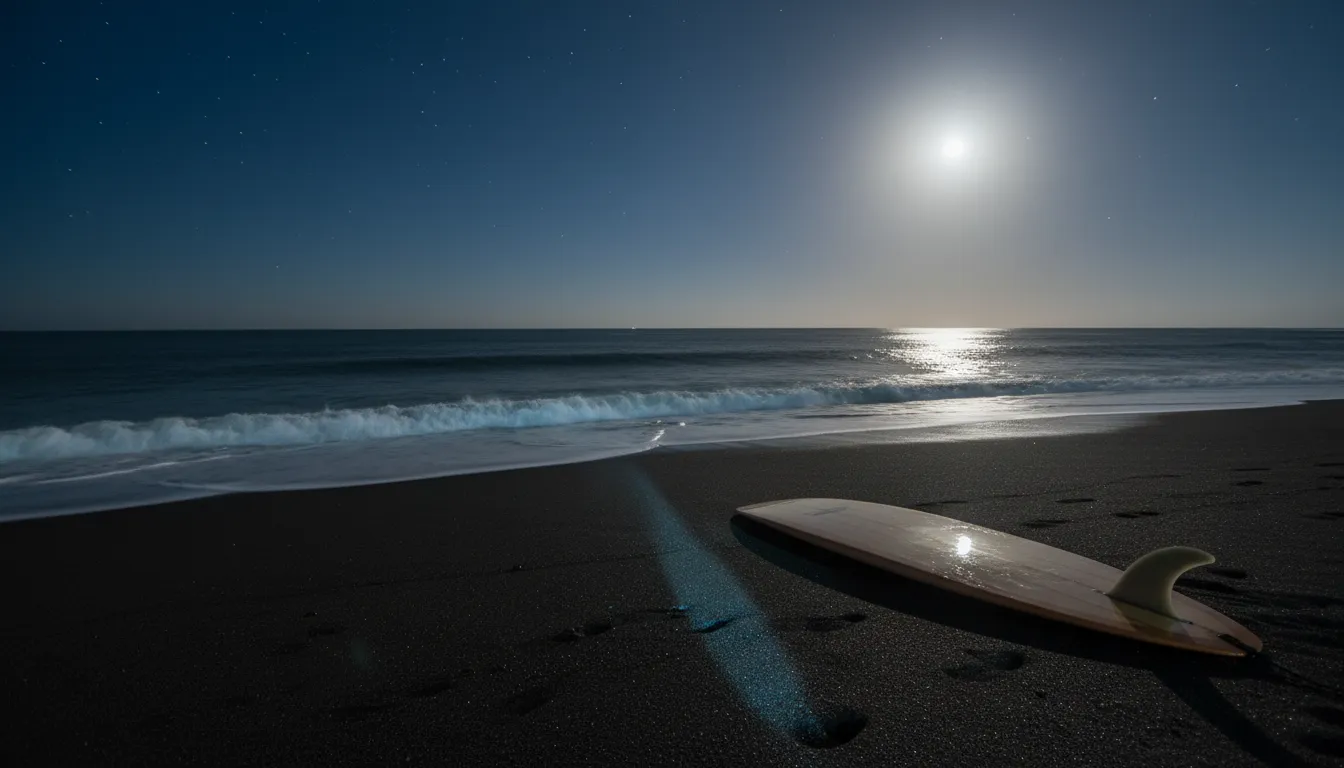
If there’s one semi-reliable window for night surfing in Jaco, it’s during a full moon with clear skies and cooperative tides. When the lunar cycle aligns properly, Jaco’s main break—the same waves visible from our ocean-facing balconies at Jaco Beach Zen—receives enough silvered illumination to actually distinguish the approaching sets from the dark water.
This isn’t the time to chase performance surfing or work on your cutbacks. Full moon sessions are about soul-surfing in its purest form: paddling out under a sky so bright you can see your shadow on the water, feeling the ocean’s rhythm without the visual noise of daytime sessions, and experiencing a level of connection with the Pacific that daylight somehow dilutes. The waves you’ll catch will likely be smaller, mellower runners—perfect for longboarders and anyone who values the experience over the Instagram clip.
Timing is everything for these sessions. Check the understanding Jaco’s tides carefully because a full moon during high tide can create surprisingly different conditions than low tide. You want enough water depth to safely navigate the sandbars but not so much that the waves lose their shape entirely. Most local surfers who’ve attempted full moon sessions report that the hour just after moonrise or before moonset offers the best combination of light and manageable conditions.
One practical tip from someone who’s watched countless moonlit swells from shore: bring a friend who’s content to sit on the beach with a headlamp and keep visual tabs on you. It’s romantic to think about solo midnight surf sessions, but the reality is that even Jaco’s forgiving beach break becomes significantly trickier when you can’t clearly see where you are relative to shore. The moon might illuminate the waves, but it won’t help you spot that rip current you’re drifting into.
Bioluminescence: The Ocean’s Own Light Show (Surfboard Optional)
Now we’re entering the realm of legitimately rare experiences. While Costa Rica isn’t famous for bioluminescent surfing the way Puerto Rico’s Mosquito Bay is, Jaco’s waters do occasionally host the right conditions for subtle glowing plankton displays. We’re talking about specific dinoflagellate blooms combined with warm water temperatures and minimal moon interference—basically, the stars have to align.
When it does happen, the experience is less about traditional surfing and more about becoming part of nature’s light show. Imagine every paddle stroke leaving a trail of electric blue sparkles, your board creating a glowing wake as you glide across the face of a wave, water droplets falling from your hands like liquid starlight. It’s the kind of thing that makes you forget about proper technique and just exist in the moment.
The catch? This phenomenon is wildly unpredictable in Jaco. Unlike dedicated bioluminescent destinations where tour operators can practically guarantee the show, here it’s a matter of being in the right place during the right plankton bloom. Some local fishermen report seeing it more frequently during certain times of year—typically the warmer months between May and November—but there’s no surf forecast that’ll tell you when the ocean decides to glow.
If you’re dead-set on experiencing bioluminescence during your Costa Rica trip, you might be better off booking a dedicated tour to one of the country’s bioluminescent bays on the Caribbean side. But if you’re staying in Jaco and happen to notice that eerie blue glow while walking the beach at night? Grab your board, find a buddy, and paddle out carefully. Just remember that the plankton don’t care about swell direction or wave quality—you’re out there for the light show, not the session of your life.
The Practicalities: Safety First, Stoke Second (But Still Second)
Let’s talk about keeping yourself in one piece because night surfing, however romantic it sounds, comes with legitimate risks that daytime sessions don’t present. This isn’t meant to scare you off entirely—just to ensure you’re making informed decisions rather than impulsive ones.
The buddy system is absolutely non-negotiable. I don’t care if you’re Kelly Slater’s cousin twice removed; you don’t paddle out alone at night in Jaco. Even our generally mellow beach break becomes significantly more challenging when you can’t clearly see the horizon, judge distances accurately, or signal for help if something goes wrong. Bring a friend who’s equally comfortable in the water, and ideally someone who’s surfed this break during daylight enough times to know it intimately.
Stick to breaks you know like the back of your hand. Night surfing is not the time to explore that interesting-looking point break you noticed during your afternoon beach walk. The main break directly off Jaco Beach—the one you can see from our property—is your safest bet because you already know where the sandbars shift, where the currents typically run, and what the bottom composition feels like under your feet. Familiarity breeds safety in this context.
Gear up intelligently. A quality waterproof headlamp is your minimum requirement—get one with multiple brightness settings and a secure strap that won’t come loose during a wipeout. Some surfers swear by adding reflective tape strips to their boards, making them easier to spot if you get separated. A bright-colored rashguard helps too, especially if you’ve got that friend on the beach keeping watch. Our concierge service can point you toward Jaco’s best surf shops that stock this specialized gear, though don’t expect huge inventories since demand is pretty niche.
Honestly consider the non-surf alternative. Sometimes the smartest decision is recognizing that Jaco’s after-dark beach scene offers equally compelling experiences that don’t involve risking a nighttime swim rescue. A bonfire with fellow travelers, stargazing from the sand with a cold beer, or simply listening to the waves crash while planning tomorrow’s dawn patrol—these are legitimate ways to connect with Jaco’s surf culture without the risks. There’s zero shame in being the person who appreciates the ocean from shore after sunset. In fact, it’s usually the smarter play.
Nighttime Beach Vibes: Jaco’s Post-Sunset Surf Culture
Even if you decide that actually surfing at night isn’t your scene, Jaco’s beach doesn’t exactly roll up the sidewalks when the sun dips below the horizon. The surf culture here extends well into the evening, creating a different but equally authentic vibe that’s worth experiencing.
Walk the beachfront after 8 PM and you’ll find impromptu bonfires with surfers “talking story”—that timeless tradition of recounting the day’s best waves, worst wipeouts, and near-misses with wildlife. Guitarists materialize from nowhere, local dogs claim their favorite spots near the warmth, and the conversation flows as freely as the Imperial beer. It’s pure Pura Vida, the kind of moment that reminds you why people fall in love with Costa Rica’s surf towns in the first place. These gatherings aren’t organized events or tourist attractions; they just happen organically when people who love the ocean end up in the same place at the same time.
The local bar scene keeps the stoke alive too. Places like The Surf Club screen classic surf films, host live music, and serve as unofficial clubhouses where you’ll rub shoulders with everyone from visiting pros to crusty locals who’ve been riding these waves since before you were born. It’s here that you’ll get the real beta on tomorrow’s conditions, learn which breaks are firing, and possibly score an invitation to join someone’s dawn patrol crew. The surf videos playing on loop are almost always daytime sessions—because even in Jaco’s relaxed surf culture, nighttime surfing remains the exception rather than the rule.
For the digital nomads reading this, here’s where Jaco Beach Zen’s setup becomes genuinely useful for your surf-focused lifestyle. Our lightning-fast fiber optic internet means you can check the detailed morning swell forecast from our ocean-facing balconies, coffee in hand, watching the very waves you’ll be riding in a few hours. You can review the latest surf reports, coordinate with other remote workers who surf, and still make that 9 AM video call before heading out for a mid-morning session. It’s the perfect blend of staying connected professionally while remaining deeply connected to Jaco’s vibrant after-surf scene—without the risks that come with trying to navigate the lineup in darkness.
The beauty of experiencing Jaco’s nighttime beach culture is that it keeps you plugged into the surf community without requiring you to paddle out when visibility is compromised. You’ll wake up more informed, better connected, and ready to absolutely maximize your dawn patrol in Jaco when the conditions are actually optimal for progression and safety. Sometimes the best nighttime surf decision is preparing for an epic morning session instead.
FAQs
Is night surfing common in Jaco Beach?
No, night surfing is quite rare in Jaco and isn’t a regular activity for most surfers. While the occasional full moon session happens among experienced locals, the vast majority of surfing occurs during daylight hours when conditions are safer and more predictable. Most surf shops don’t offer night equipment rentals or lessons specifically because demand is minimal and safety concerns are significant. If you’re hoping to experience Jaco’s waves, plan for dawn patrol through sunset sessions instead.
Can I rent equipment for nighttime surfing in Jaco?
Standard surfboard rentals are widely available, but specialized night surfing gear like waterproof headlamps, reflective board tape, or illuminated equipment is much harder to find. Most rental shops close by early evening and don’t specifically cater to night surfing since it’s not a common request. Your best bet is visiting a general outdoor/surf shop during business hours to pick up a quality waterproof headlamp and any reflective materials you want to add to your own or rented board.
Are there guided night surf tours available in Costa Rica?
Legitimate guided night surf tours are extremely rare in Jaco and most of Costa Rica. Unlike activities such as night zip-lining or nocturnal wildlife tours that are regularly offered, the liability and safety concerns around night surfing mean few if any operators provide this service. If you find someone advertising night surf tours, thoroughly vet their credentials, insurance, and safety protocols before committing. Most reputable surf schools stick exclusively to daylight instruction for very good reasons.
What are the safest conditions for surfing at night in Jaco?
The safest scenario combines a full moon providing natural illumination, smaller swell conditions (waist-to-chest high maximum), minimal current activity, and surfing with an experienced buddy who knows the break intimately. Only surf spots you’ve ridden dozens of times during daylight, avoid alcohol completely, and have someone on shore with a light and phone for emergencies. Honestly, the safest night surfing condition is often choosing not to paddle out and waiting for dawn instead.
Is bioluminescent surfing a real thing in Jaco?
Bioluminescence does occasionally occur in Jaco’s waters when conditions align—warm temperatures, specific plankton blooms, and dark nights—but it’s unpredictable and relatively rare compared to dedicated bioluminescent destinations. When it happens, it’s genuinely magical, with paddle strokes and waves creating glowing trails. However, you can’t plan a trip around experiencing it in Jaco. If bioluminescence is a must-see for your Costa Rica adventure, consider booking a tour to one of the Caribbean coast’s more reliable bioluminescent bays.
What should I do if I get into trouble while night surfing?
If you find yourself in difficulty during a night session, stay calm and remember your surf safety fundamentals: don’t fight rip currents, ditch your board if necessary to swim more effectively, and signal your beach buddy with your headlamp by waving it in wide arcs. This is precisely why night surfing should never be attempted alone. If you’re surfing near Jaco Beach Zen or the main beach area, there’s usually someone within shouting distance even late in the evening, but don’t count on quick rescue response times after dark.
Are Jaco’s beaches safe at night for non-surfing activities?
Jaco’s main beach areas with ambient lighting from hotels and restaurants are generally safe for evening walks, bonfires, and hanging out, though basic precautions apply everywhere. Stick to well-lit, populated areas, don’t leave valuables unattended, and use the same street smarts you’d exercise anywhere after dark. The beachfront near our property and the central beach zone see regular foot traffic into the evening. For families, supervised beach activities like bonfire gatherings are far safer than attempting night surf sessions with kids.
Do most surf schools in Jaco offer nocturnal lessons?
No, reputable surf schools in Jaco overwhelmingly focus on daylight instruction when students can actually see the waves, receive proper visual feedback on their technique, and operate in safer conditions. Night lessons aren’t part of standard offerings, and any school claiming to specialize in them should raise immediate red flags about their safety standards and insurance coverage. Quality instruction happens when both teacher and student can clearly observe the ocean environment, body positioning, and wave mechanics—all of which require adequate lighting.
Bahía Azul, unit 7C sits right on this stretch of sand — on the quiet south end of Jacó, a few hundred feet from the water.
Book on Airbnb