Unpacking Jacó’s ‘Historic’ Buildings: A Witty Wander Through Our Architectural Past
Let’s get this straight from the jump: if you’re expecting grand colonial plazas, ornate Spanish cathedrals, or UNESCO-certified ruins in Jacó, you’ve taken a delightful wrong turn. Our “historic” architecture tells a different story entirely—one written not in centuries-old stone but in the rapid-fire evolution from sleepy fishing village to Costa Rica’s most accessible surf town. The beauty of Jacó’s built environment isn’t about antiquity; it’s about adaptation, transformation, and a refreshingly honest architectural narrative that mirrors the town itself. Within a few walkable blocks from spots like Jaco Beach Zen, you’ll find buildings that have lived multiple lives, each chapter more interesting than the last. So grab your curiosity (and maybe some sunscreen), because we’re about to explore what makes Jacó’s architectural timeline uniquely compelling.
Jacó’s ‘Ancient’ History, Redefined: Where Our Buildings Tell a Different Story
Unlike San José with its Teatro Nacional or Cartago’s earthquake-tested basilicas, Jacó wasn’t founded on centuries-old colonial grandeur. Our town’s architectural story begins in earnest in the mid-20th century, when this stretch of Pacific coastline was better known for fishing boats than foam boards. The “historic” designation here is relative—we’re talking decades, not centuries, but that doesn’t make the narrative any less fascinating.
What you will discover is a unique architectural blend that speaks volumes about Costa Rica’s coastal evolution. Traditional Tico construction methods meet mid-century surf vernacular, creating a built environment that’s functional, unpretentious, and surprisingly revealing. The wooden fishing shacks that once dotted the beach have given way to concrete block constructions, which themselves are now being transformed into contemporary mixed-use buildings. It’s architectural Darwinism in action, and every repurposed structure has stories layered like paint.
The most intriguing aspect? Many of Jacó’s “oldest” buildings are still actively serving the community, just in completely different capacities than originally intended. That colorful surf shop might have started life as a family home in the 1970s. The beachfront restaurant could have been the town’s first proper hotel. This constant reinvention is our architectural heritage, and it’s far more dynamic than any preserved colonial relic.
The Humbler Foundations: Tracing Jacó’s Building Blocks Back in Time
Jacó’s earliest permanent structures were exercises in practical coastal living. Think less “grand estate,” more “how do we keep the rain out and the breeze flowing?” The original homes were modest wooden constructions, often elevated on stilts or concrete pillars to handle the tropical climate’s dual threats: seasonal flooding and relentless humidity. These weren’t architectural statements; they were sensible responses to environmental realities.
The tell-tale signs of these older constructions are still visible if you know where to look. Specific roof lines—often steeply pitched to shed tropical downpours—mark the pre-tourism era. Simple concrete foundations, poured before modern engineering became standard, support structures that have weathered decades of salt air and Pacific storms. And those expansive, shaded front porches? They weren’t lifestyle choices; they were the original climate control system, creating outdoor living spaces that caught ocean breezes and served as the true heart of family life.
Walk the residential streets radiating from the main drag, and you’ll still spot these humble foundations. Some have been renovated beyond recognition, their practical bones now wrapped in modern facades. Others remain beautifully unchanged, painted in fading pastels, their wooden shutters slightly askew but still functional. These buildings represent Jacó’s working-class roots, before surf tourism transformed the economic landscape. At Jaco Beach Zen, we’ve taken inspiration from this ethos—blending modern comfort with an appreciation for the low-key, practical coastal living that defined early Jacó, where function and relaxation walked hand in hand.
Mid-Century Modern & Surf Shacks: Jacó’s Post-Paved Road Boom
Everything changed when the roads improved in the 1960s and 70s. Suddenly, Jacó wasn’t just accessible by rugged four-wheel drive or coastal boat—it was within reach of San José weekenders, pioneering surfers, and entrepreneurs who saw opportunity in those consistent Pacific swells. This influx brought a wave of more “modern” designs that still define much of downtown’s character today.
These buildings embraced concrete block construction, often painted in cheerful, sun-faded colors that seem to absorb the tropical light. There’s a distinct lack of fussy ornamentation—form followed function with admirable directness. Large windows without elaborate frames. Flat or gently sloped roofs. Simple rectangular footprints that maximized usable space. This was architecture for a new kind of coastal town, one built for commerce and tourism rather than subsistence fishing.
Many of these structures served as Jacó’s first proper hotels, surf shops, and beachfront eateries. They’re still standing today, though most have undergone numerous renovations, their bones hidden beneath fresh paint and updated signage. The current Jacó Catholic Church is the poster child for this era—a decidedly non-colonial, functional design from the 60s or 70s that’s as much a local landmark as any centuries-old chapel elsewhere in Costa Rica. It’s unpretentious, practical, and entirely representative of Jacó’s architectural personality: we build what works, not what impresses from a distance.
The Evolution of Urban Space: From Teatro Jacó to Today’s Hotspots
In Jacó, “historic” landmarks are often defined by their repurposing rather than their preservation. Take the building that once housed Teatro Jacó, which opened around 2011 with aspirations of bringing performing arts to our surf-centric town. Today, it serves a completely different commercial purpose, but its contemporary facade remains a quirky reminder of those cultural ambitions. Did the theater succeed in its original mission? Not exactly. But the building adapted, as Jacó buildings do.
Many of the current popular restaurants, bars, and shops along the main strip occupy buildings that have undergone multiple transformations. Each layer tells a story about Jacó’s adaptive spirit and changing economic needs. A building that started as a family sodas (small restaurant) might have become a surf rental shop in the 80s, a backpacker hostel in the 90s, and now houses an upscale fusion restaurant. The facades change, the interiors get gutted and rebuilt, but the footprint remains, accumulating history with each iteration.
This is where a walkable location becomes invaluable. From Jaco Beach Zen, you can stroll these evolving urban spaces at your own pace, imagining the layers of commerce and community that have occupied each building. The downtown core is compact enough to explore thoroughly in an afternoon, yet dense enough with these architectural palimpsests to keep things interesting. Every doorway is a potential time capsule; you just need to look beyond the current paint job.
Architectural Scavenger Hunt: What to Look for on Foot (Safely!)
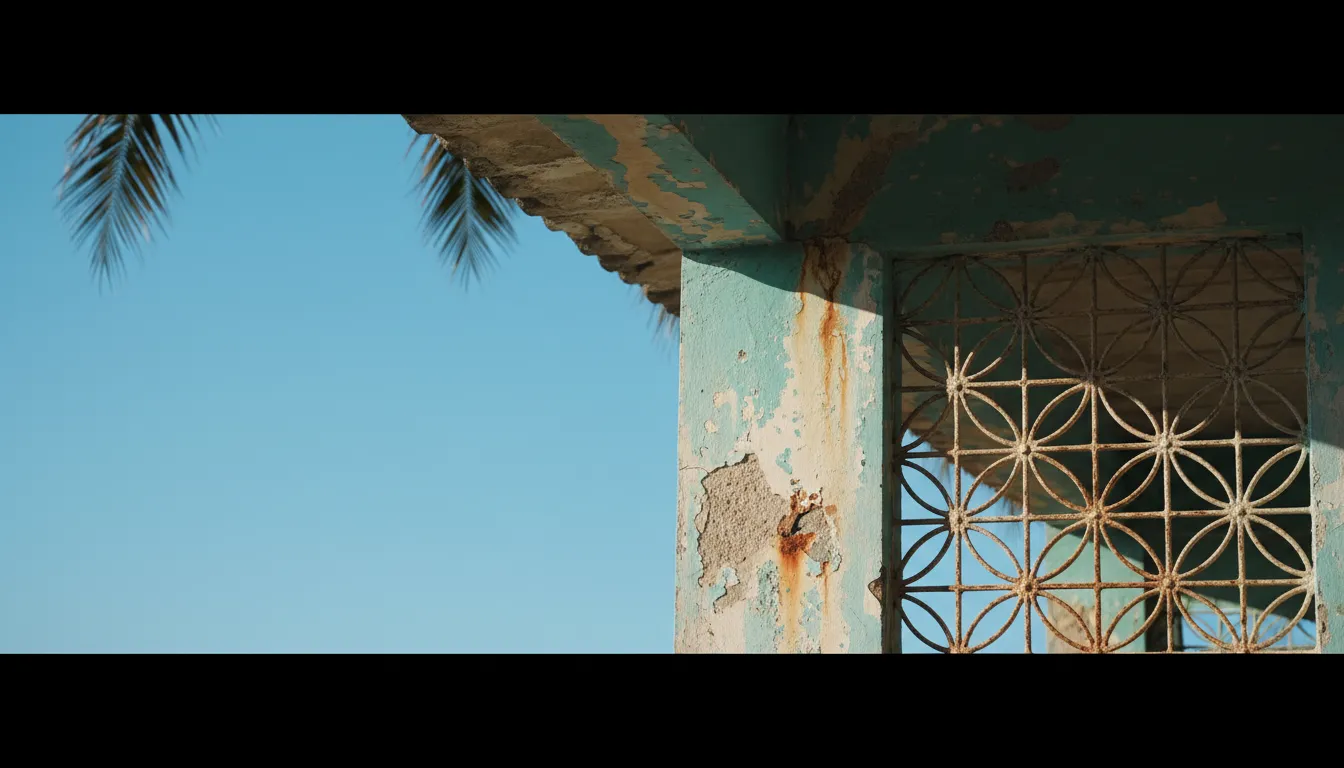
Once you start paying attention, Jacó’s architectural details reveal themselves everywhere. Keep an eye out for unique window grilles—some featuring geometric patterns that were popular in the 70s and 80s, others with more organic designs that hint at individual craftsmanship. Notice how older homes incorporated large, shaded patios to combat the brutal midday sun, creating outdoor rooms that were cooler than anything inside.
Faded murals on exterior walls offer another layer of discovery. Some advertise businesses that closed years ago; others are purely decorative, their colors bleached by decades of tropical sun but still visible if you squint. These unintentional historical markers are often more revealing than any formal monument, showing what mattered to Jacó residents in different eras.
We strongly recommend exploring during daylight hours, ideally in the morning or late afternoon when the heat is less oppressive and the light is better for photography. While Jacó is generally safe for pedestrians, being aware of your surroundings and sticking to well-trafficked areas adds an extra layer of peace of mind, especially for families. The main streets are always busy with tourists and locals, creating a naturally secure environment for wandering.
Sometimes the most “historic” details are in the smallest, most unassuming places. A perfectly preserved old business sign, hand-painted and slightly crooked. A unique fence design using materials that aren’t sold anymore. The style of a brick wall that’s been there for decades, its mortar pattern different from modern construction. These details won’t make it into any guidebook, but they’re the real architectural heritage of Jacó—practical, unpretentious, and authentically local.
Frequently Asked Questions
Are there really no ancient ruins or colonial buildings in Jacó?
Correct—Jacó lacks the colonial architecture found in cities like San José or Granada. Our town’s permanent development began in earnest during the mid-20th century when improved roads made the coast accessible. The “historic” buildings here date from the 1960s-70s onward, reflecting Jacó’s evolution from fishing village to surf destination. If you’re seeking ancient ruins, you’ll need to venture to sites like Guayabo National Monument, several hours away. Jacó’s architectural interest lies in its rapid transformation and adaptive reuse, not antiquity.
What kind of ‘historic’ places can I visit in Jacó then?
Focus on buildings that showcase Jacó’s evolution: the Catholic Church (a functional mid-century design), repurposed commercial buildings along the main strip, and older residential structures in the side streets that still feature traditional coastal construction methods. The former Teatro Jacó building represents more recent cultural ambitions. Look for structures with tell-tale signs of age—specific roof lines, faded paint, unique window grilles, and architectural details that differ from modern construction. The history is in the transformation, not preservation.
Is it safe to walk around Jacó looking at old buildings?
Yes, with standard precautions. Explore during daylight hours, stick to well-trafficked streets, and remain aware of your surroundings. The downtown core and main residential areas are generally safe for pedestrians, including families. Mornings and late afternoons offer the best combination of comfortable temperatures and good light for observation. Avoid isolated areas, keep valuables secure, and trust your instincts. Most of Jacó’s interesting architecture is concentrated in walkable, populated areas where you’ll share the sidewalks with locals and fellow tourists.
Where can I find examples of traditional Costa Rican architecture in Jacó?
Venture into the residential streets perpendicular to the main drag, particularly on the northern end of town. Look for older wooden homes, often elevated on stilts, with expansive front porches and steeply pitched roofs designed for tropical rain. These structures represent practical coastal Tico construction before tourism transformed the town. Some have been renovated, but original features often remain visible. The architectural style prioritized ventilation, flood protection, and shaded outdoor living spaces—sensible responses to Jacó’s climate that modern buildings sometimes forget.
Did Jacó always have these modern-looking buildings?
Absolutely not. Early Jacó consisted primarily of modest wooden structures serving fishing families. The concrete block, brightly painted buildings that now define downtown emerged after road improvements in the 1960s-70s made tourism viable. Each development wave brought new architectural styles, from basic mid-century modern to contemporary mixed-use buildings. What you see today represents decades of evolution, with buildings constantly being renovated, repurposed, or replaced. The “modern” structures from the 70s are now Jacó’s oldest commercial buildings—a testament to how young this town really is.
Can I take a walking tour that focuses on Jacó’s architectural history?
Formal architectural tours of Jacó are rare since the town lacks the traditional historic district found in other Costa Rican cities. However, the compact downtown is perfect for self-guided exploration. Start at the Catholic Church, walk the main commercial strip noting building styles and repurposed structures, then explore residential side streets for older coastal construction examples. The entire walkable area can be covered in 2-3 hours at a leisurely pace. Consider early morning when shops are opening—you’ll see buildings in their daily context, which adds another layer to the architectural story.
Bahía Azul, unit 7C sits right on this stretch of sand — on the quiet south end of Jacó, a few hundred feet from the water.
Book on Airbnb