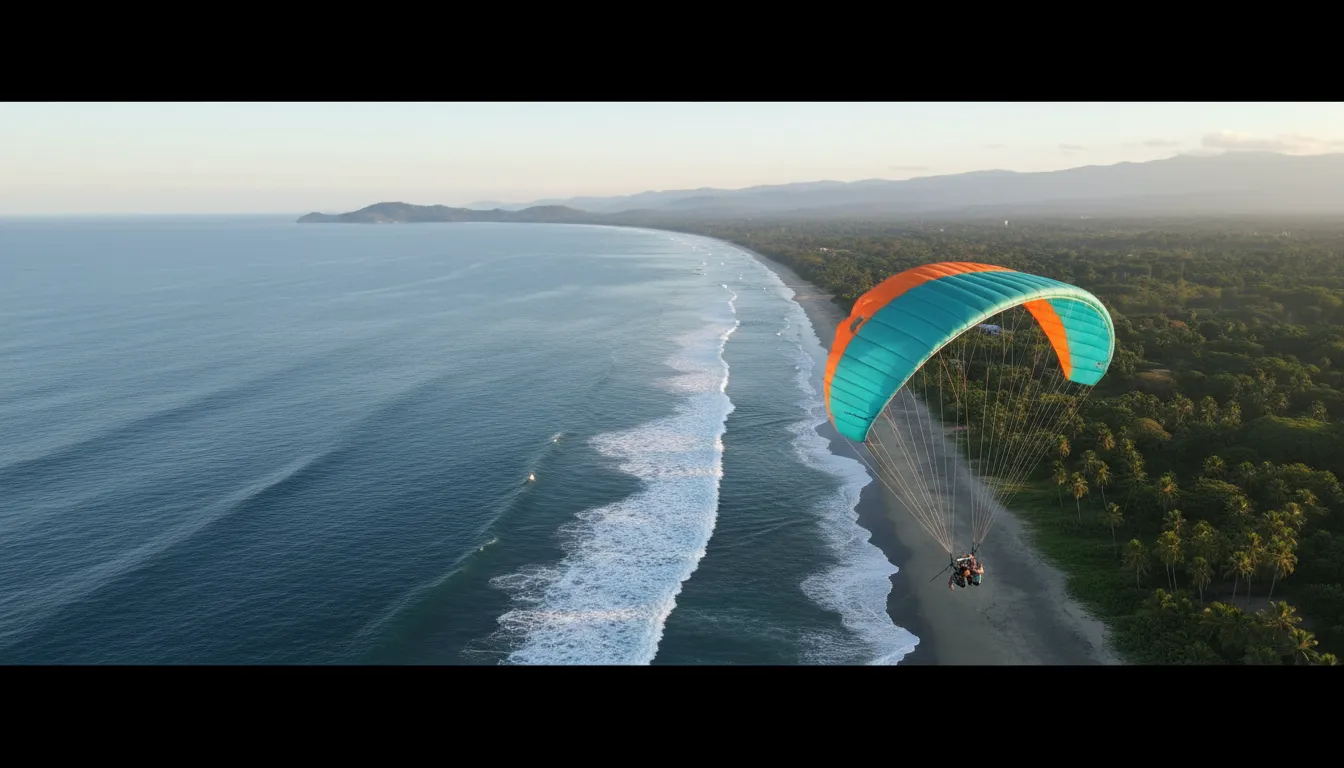
Soaring Above the Pura Vida: Your Go-To Guide for Parasailing in Jaco, Costa Rica
Ever watched those colorful parachutes glide across Jaco’s sky and wondered what it’s like up there? Spoiler: it’s every bit as magical as it looks from the beach. Parasailing in Jaco isn’t just another box to tick on your Costa Rica adventure checklist—it’s a perspective shift, quite literally. From 600 feet above the Pacific, our stretch of coastline transforms into something out of a postcard you’d actually want to write home about. The roar of beach traffic fades to nothing, replaced by wind and the occasional surprised laugh when you realize you’re dangling above pelicans. Whether you’re here with curious kids, seeking your next adrenaline fix, or just need a spectacular lunch break from that laptop, Jaco’s parasailing scene delivers. Let’s get you airborne.
Why Jaco’s Skies are Calling: A Bird’s-Eye View of Our Pacific Paradise
Imagine floating above the bustling beach, the sound of the ocean a distant whisper, and discovering just how green our mountains truly are—a view you can only get from up there. That tangle of jungle you pass on the drive into town? From parasailing height, it’s a lush carpet rolling inland toward volcanic peaks. The beach you’ve been walking all week suddenly reveals its true shape, curving gracefully in both directions with surf breaks you didn’t even know existed.
It’s not just a ride; it’s a panorama. From 600 feet up, you’ll spot the curvature of Herradura Bay to the north and the untouched coastline stretching south towards Hermosa, proving why this particular stretch of the Pacific is so special. You’ll see exactly where the Rio Copey meets the ocean (hint: that brownish patch after heavy rains isn’t pollution—it’s sediment from the mountains). You’ll understand why surfers cluster at certain breaks and why some beach sections stay empty even on weekends. This isn’t information you’ll find in guidebooks; it’s the kind of local knowledge that only comes from elevation and attention.
Finding Your ‘Wings’: The Best Parasailing Operators on Jaco Beach
Most operators set up shop right on the beach, usually towards the northern end (near the big Jaco sign) or the calmer southern stretch. Look for the colorful parachutes and the buzzing speedboats—they’re not exactly subtle. You’ll often spot them from your morning coffee walk, their crews prepping gear and checking harnesses before the first flights of the day. From Jaco Beach Zen, it’s an easy stroll along the sand to scope out which operators are active that morning.
We’ve seen ‘em all. The key to a good experience here is finding a crew with well-maintained gear and a professional, friendly vibe. Don’t be afraid to ask about their experience and equipment certifications. A reputable operator will happily show you their setup, explain their safety protocols, and answer questions without rushing you. Red flags? Frayed ropes, dismissive attitudes about weather conditions, or pressure to book immediately without details.
Expect a brief but thorough safety rundown before you even get close to the harness. If they skip this, skip them. Your peace of mind (and safety) is paramount. Good operators will check the weather multiple times, inspect every buckle and connection point, and make sure you understand the simple hand signals they’ll use during your flight. The best crews we’ve encountered treat every flight like it’s their first—methodical, careful, genuinely excited to get you safely airborne.
What Does ‘Up in the Air’ Cost? Understanding Jaco Parasailing Prices
Typically, a 10-15 minute flight will run you somewhere in the neighborhood of $60-$80 USD. Think of it as an investment in a truly unforgettable selfie opportunity (though honestly, the views are worth way more than your Instagram feed). Prices can fluctuate slightly based on season, with high season (December through April) commanding premium rates, while green season sometimes offers better deals alongside fewer crowds.
Keep an eye out for combo deals! Sometimes operators will bundle parasailing with jet ski rentals or banana boat rides. Great for families who want to hit multiple water activities in one go without negotiating separate prices. These packages typically save you 15-20% compared to booking activities individually, and they’re convenient when you’ve got energetic kids eager to try everything.
Digital nomads, consider mid-week flights. You might find slightly better rates or fewer crowds, leaving your weekend free for exploring or catching up on work with a view from your Jaco Beach Zen balcony. Tuesday and Wednesday mornings are particularly quiet, with calmer conditions and operators more willing to chat about the local marine life you’ll see from above. Plus, finishing a parasailing session by 10am leaves your entire afternoon for productivity—with significantly improved mood and perspective.
Safety First (and Fun Second): What to Know Before You Soar
Reputable operators adhere to strict safety protocols. This includes checking weather conditions meticulously—they won’t send you up if the winds are too strong or unpredictable. If they cancel, it’s for a good reason. Jaco’s afternoon winds can get gusty, which is why most parasailing happens in the morning when conditions are calmer and more predictable. A canceled flight might disappoint, but it’s infinitely better than a sketchy experience in marginal conditions.
Listen to your crew! They’ll give you clear instructions for takeoff and landing. It’s usually as simple as sitting back and letting the boat do the work. You’ll either launch from a platform on the boat itself or start from the beach with a running start (way less intimidating than it sounds). The key is staying relaxed and trusting the process—tension makes everything harder. For more comprehensive guidance on staying safe in Jaco’s waters, check out our water safety tips.
Harness checks are non-negotiable. Ensure your harness fits snugly and all buckles are double-checked. This isn’t the time for a loose fit. Kids are often flown tandem with an adult, and operators are vigilant about proper sizing and procedures. Weight limits exist for good reasons (typically 350-400 lbs combined for tandem flights), and honest operators won’t bend rules for a quick buck. Your crew should adjust straps, test connections, and explain how the harness works before you’re anywhere near the water.
Jaco’s Parasailing: Family-Friendly Fun That Elevates Everyone
Most operators welcome children, often requiring them to be a certain age (usually 6+) or weight (minimum 50 lbs), or to fly tandem with an adult. It’s a fantastic way to introduce little adventurers to controlled thrills. Unlike surfing, which demands skill and stamina, parasailing is genuinely accessible—kids get the rush without the learning curve or the wipeouts.
The beauty of parasailing is its gentle nature once you’re aloft. It’s exhilarating without being jarring, making it a great option for multi-generational travel or those who prefer softer adventures. Grandparents often surprise themselves by loving it, and teenagers who claim to be too cool for family activities tend to drop the attitude at 500 feet. The shared experience of seeing Jaco from that perspective creates genuine bonding moments.
Digital nomads looking to blow off some steam? A quick parasail flight fits perfectly into a lunch break, leaving you refreshed and ready to tackle that afternoon deadline from your ocean-view workspace. There’s something about literally rising above your problems (even temporarily) that resets your mental state. After a morning of video calls and deadlines at Jaco Beach Zen, an hour at the beach including your flight provides the perfect midday reset.
Beyond the Blue: What to Expect During Your Flight
The takeoff is surprisingly smooth; you’ll gradually lift off the platform at the back of the boat or directly from the beach. There’s no lurching or sudden jerks—just steady ascent as the boat accelerates and the parachute catches wind. Within seconds, you’re airborne, watching the crew on the boat shrink to toy-sized figures. The ascent takes maybe 30 seconds, and then you’re just… there. Floating. Quiet.
Up top, it’s mostly quiet, save for the wind. This is your moment of zen (pun intended)—soak in the views, spot the surf breaks, and perhaps even glimpse a passing pelican. You might see rays gliding through the shallows, surfers paddling out at breaks you didn’t know existed, or the precise moment where river water meets ocean. The silence is striking after beach-level noise. Some people meditate up there; others can’t stop grinning. Both reactions are completely valid.
The landing is often as gentle as the takeoff, either back onto the boat’s platform or a soft touch-down in the shallows near the beach. Prepare for a splash if it’s the latter! Operators will signal when you’re descending, and you’ll gradually be reeled back toward the boat. If you’re landing in water, you’ll get your legs wet (sometimes up to your waist), so plan accordingly. The whole experience—from harness-up to back on solid ground—typically runs 20-30 minutes, with 10-15 minutes actual air time.
Frequently Asked Questions
How long is a parasailing flight in Jaco?
Most flights last 10-15 minutes in the air, though your total time commitment including safety briefing, harnessing up, and boat positioning runs about 30 minutes. The actual airborne portion might sound short, but trust us—when you’re floating 600 feet above the Pacific with 360-degree views, time dilates beautifully. Those minutes feel substantial, giving you plenty of time to shift from “oh wow” to actually processing what you’re seeing below.
Do I need to make a reservation for parasailing?
Reservations aren’t always mandatory, but they’re smart—especially during high season (December-April) or on weekends. Walk-ups often work during quieter periods, but you risk waiting around or finding operators fully booked. Booking ahead (even just the night before) guarantees your preferred time slot and lets operators plan around weather windows. Most accept reservations via WhatsApp or through local tour agencies, making the process refreshingly simple.
Can non-swimmers go parasailing in Jaco?
Absolutely! You’ll wear a life jacket regardless of swimming ability, and landings are controlled by the crew. Most of your time is spent airborne anyway—not swimming. That said, you should be comfortable with the possibility of getting wet, as some landings involve brief water contact. If water anxiety is a concern, mention it to your operator. They can often arrange dry platform landings or provide extra reassurance during the safety briefing.
What should I wear for parasailing?
Swimsuit, secure footwear (water shoes or sandals with straps—flip-flops will fly off), and clothing you don’t mind getting wet. Avoid loose items like hats or unsecured sunglasses, which become projectiles at altitude. Waterproof sunscreen is essential; you’re exposed up there with no shade and reflective water amplifying UV. Consider a rash guard for sun protection. Bring a dry bag for phones, wallets, and car keys—leave them on the boat or with your beach group.
Is parasailing scary? Will I feel dizzy?
Honestly? The anticipation is usually scarier than the actual experience. Once airborne, most people find it peaceful rather than frightening—you’re secured in a harness, ascending gradually, with no sensation of falling. Motion sickness is rare since the movement is smooth and steady, unlike a boat’s rocking. Heights-anxious folks often surprise themselves; the distance creates a weirdly calming abstraction. That said, if you have genuine acrophobia, this might not be your activity—and that’s perfectly fine.
Can I bring my camera or phone up when parasailing?
Many people do, but it’s at your own risk. Operators aren’t responsible for dropped devices, and the ocean floor here is littered with expensive phones. If you’re bringing electronics, use a secure wrist strap (not just a neck lanyard) and consider a waterproof case. Some operators offer photo packages where crew members capture your flight from the boat—often a better option than fumbling with your phone while trying to enjoy the moment. GoPros with head or chest mounts work brilliantly if you’ve got one.
Bahía Azul, unit 7C sits right on this stretch of sand — on the quiet south end of Jacó, a few hundred feet from the water.
Book on Airbnb